26 June 2012

Navigating "Autogeography"

So, you know those stories you read about where someone gets a phone call telling them they've won something, and the person doesn't believe it, or thinks it must be a practical joke? Yeah, well....now it's happened to me.
Cover of the draft manuscript

I was VERY humbled and honored to find out yesterday that my manuscript, Autogeography, was chosen for this year's Cave Canem Northwestern University Press Poetry Prize. I still don't quite believe it, and expected to wake up today discovering that it all had been a hallucination. (It also didn't help that it was my birthday!)

But now there's a press release and everything, so I guess it must be true!:)

I want to thank the judges, Parneshia Jones and Janice Harrington, for selecting my work, and everyone who helped me to pull what started life as a wild hairy mess of pages together into something like a coherent text - or as close to coherent as I can get, anyway. This is, in fact Autogeography 2.5as I've said to a few people, I put the manuscript together, sent it out for folks to critique, then about six months later decided to rework the whole thing, as I was no longer happy with it. After some cutting, reshuffling, and various other forms of revision short of tossing it in the air and letting the pages organize themselves on the floor, I had something I felt a little better about. The odd thing is, however, I was looking at it AGAIN over the weekend, thinking, "Hmm....This one, I don't know...Maybe I should....."


"A poem is never finished, only abandoned." - Paul Valery (In my case, that goes for books as well!)


The press release is below, and after that, one of the poems mentioned by Janice Harrington.

Thank you, thank you, thank you!


***************************************

Cave Canem and Northwestern University Press are pleased to announce that Reginald M. Harris has been awarded the 2012 Cave Canem Northwestern University Press Poetry Prize for his manuscript Autogeography, selected by judges Janice Harrington and Parneshia Jones, and slated for release in summer 2013. This second-book award for African American poets, offered every other year, celebrates and publishes works of lasting cultural value and literary excellence. In addition to publication by Northwestern University Press, the recipient receives $1,000. About AutogeographyJanice Harrington writes:

Auto meaning self or same, and Geography meaning earth writing. In Autogeography, Harris explores the geographies that have written his identity as an African American and as a gay male. His stylistically diverse collection is personal, contemporary, marked by the rhythms of African American music, inventive, and filled with a disarming wit. In ‘The Poet Behind the Wheel,’ Harris writes of the poet: ‘Do NOT let him drive you: / Buckle up and hours later / Who knows where you’ll arrive’—advice readers will be happy to ignore as Autogeography travels through a landscape of personal lyrics, descriptive portraits, and historical witness.  This is poetry that wants to speak to readers and not above them.  He walks the streets you walk, sees the people you see, feels—especially in ‘The Lost Boys: A Requiem’— the same heart-breaking despair over the plight of African American males (drugs, violence, AIDS, urban ruin) that you feel. Harris is driving and readers are lucky to be in the passenger seat.”
Alison Meyers, Executive Director, Cave Canem Foundation


The Poet Behind the Wheel


is dangerous. Juggling pad, pen,
steering column, each traffic light
brings forth a line, every Yield a different
turn of phrase. The speedometer

counts out syllables, not speed
and directions come apart under his fingers.
Maps lose their meaning         Right?      Second
Left?               Gas station? –
only words, playing cards to be reshuffled later.

Do not get caught behind him
he drives slowly, leads followers astray
Do not honk your horn
it reminds him of Purcell, Armstrong, the Walls of Jericho.

Do NOT let him drive you:
Buckle up and hours later
who knows where you’ll arrive.

(Reginald Harris, from Autogeography, Northwestern University Press, 2013)

01 June 2012

Poem: Alabanza by Martín Espada

Martín Espada was at Poets House last night, and read the title work from his non-fiction collection The Lover of a Subversive Is Also a Subversive: Essays and Commentaries (University of Michigan Press, 2010). The subtitle of the essay is "Colonialism and the Poetry of Rebellion in Puerto Rico," and focuses on writers Clemente Soto Vélez, Juan Antonio Corretjer, Francisco Matos Paoli, and others. It was terrific to hear him deliver it, bringing the poems embedded in the text to life (Espada began by saying that the way he writes essays is to begin with poetry then wrap his comments around them "like bacon and liver.")

In the Q & A afterward, he talked about how we live in an "Age of Hyper-Euphemism," and "the divorce of language and meaning," and how it was the job of the poet to "take back the language....restoring the blood to words." Something to ponder over the weekend....

Martín Espada, with poet John Murillo, at Poets House, 5/31/2012
Here's one of my favorite Espada poems (IMHO one of the best poetic 'responses' to 911), and the title of his "New and Selected Poems 1982-2002), a good place to start for those who want to read more work by this important poet.

Alabanza: In Praise of Local 100   


for the 43 members of Hotel Employees and Restaurant Employees Local 100, working at the Windows on the World restaurant, who lost their lives in the attack on the World Trade Center

Alabanza. Praise the cook with the shaven head
and a tattoo on his shoulder that said Oye,
a blue-eyed Puerto Rican with people from Fajardo,
the harbor of pirates centuries ago.
Praise the lighthouse in Fajardo, candle
glimmering white to worship the dark saint of the sea.
Alabanza. Praise the cook's yellow Pirates cap
worn in the name of Roberto Clemente, his plane
that flamed into the ocean loaded with cans for Nicaragua,
for all the mouths chewing the ash of earthquakes.
Alabanza. Praise the kitchen radio, dial clicked
even before the dial on the oven, so that music and Spanish
rose before bread. Praise the bread. Alabanza.

Praise Manhattan from a hundred and seven flights up,
like Atlantis glimpsed through the windows of an ancient aquarium.
Praise the great windows where immigrants from the kitchen
could squint and almost see their world, hear the chant of nations:
Ecuador, México, Republica Dominicana, 
Haiti, Yemen, Ghana, Bangladesh.
Alabanza. Praise the kitchen in the morning,
where the gas burned blue on every stove
and exhaust fans fired their diminutive propellers,
hands cracked eggs with quick thumbs
or sliced open cartons to build an altar of cans.
Alabanza. Praise the busboy's music, the chime-chime
of his dishes and silverware in the tub.
Alabanza. Praise the dish-dog, the dishwasher
who worked that morning because another dishwasher 
could not stop coughing, or because he needed overtime
to pile the sacks of rice and beans for a family
floating away on some Caribbean island plagued by frogs.
Alabanza. Praise the waitress who heard the radio in the kitchen
and sang to herself about a man gone. Alabanza.

After the thunder wilder than thunder,
after the booming ice storm of glass from the great windows,
after the radio stopped singing like a tree full of terrified frogs,
after night burst the dam of day and flooded the kitchen,
for a time the stoves glowed in darkness like the lighthouse in
Fajardo,
like a cook's soul. Soul I say, even if the dead cannot tell us
about the bristles of God's beard because God has no face,
soul I say, to name the smoke-beings flung in constellations
across the night sky of this city and cities to come.
Alabanza I say, even if God has no face.

Alabanza. When the war began, from Manhattan to Kabul
two constellations of smoke rose and drifted to each other,
mingling in icy air, and one said with an Afghan tongue:
Teach me to dance. We have no music here.
And the other said with a Spanish tongue:
I will teach you. Music is all we have.

from Alabanza: New and Selected Poems 1982-2002 (W. W. Norton & Company)

28 May 2012

Recent Reading (Memorial/Memory Day)

Although Memorial Day is set aside to honor those in the Armed Forces, this excerpt from Keith Haring's fantastic Journals - which I have NOT been able to put down all weekend! --  that speaks to keeping alive the memory of our friends, mentors, and those who have inspired and helped show us the way in life (there are many ways to be 'of service to our nation' which is what Memorial/Decoration Day is supposed to commemorate)

I feel the way Haring does about SO MANY friends, family and fellow writers and artists, some of whom are still alive, and some who have passed on - or, better said, who have "dropped the body," for their spirit still survives and the memory of them and what they gave me and others survives to this day. I am eternally grateful to them, and thank them for welcoming me into 'the brotherhood.'

(And a special thank you to Keith and the Brooklyn Museum!)


Friday May 22, 1987

Quick meeting with a woman who called and wanted to talk about Brion Gysin and the problem of not letting him disappear.... Brion Gysin and William Burroughs have had an incredible influence on me and provided a lot of inspiration....It's important that his work be available for future generations of artists. Their work gave me a structure to understand what I had already done....

Also, it was my first real contact with "the brotherhood" of artists that has existed through the ages. They initiated me, in a way, into this "brotherhood" by sharing with me some of the secrets and intimacies of their lives as young, gay artists. There is a very real historical line that can be traced all the way back. Brion knew all about this. He spoke of it very eloquently and, although thoroughly more intelligent than me, never talked down to me, but talked to me as if I were also a part of this. Through his confidence in me and his assurance and analogies to my historical counterparts, I began to accept the fact that I am part of this, whether history will accept it or not. Many, like Brion, have been written out of history by the uninformed, barbarically (fake intellectual) conservative, homophobic public. It is up to the people who knew Brion and understood his importance to try to fight against his disappearance....

Self-Portrait with Glasses Painted by Kenny Scharf, circa 1980. Polaroid photograph. Collection Keith Haring Foundation. © Keith Haring Foundation

I strongly encourage you to visit Haring.com and the Haring Foundation Blog for more about Keith, and the work his art continues to do.


17 May 2012

International Day Against Homophobia/RIP Donna Summer

How sad and slightly ironic that the "Disco Queen" Donna Summer should pass today, the International Day Against Homophobia. Founded by the Martiniquean academic Louis-Georges Tin, the day attempts to coordinate events around the world to garner support and respect for lesbians and gays.

So to lose Donna today - Wow...Her music was the soundtrack of my young and not so young life. You HAD to hear a Donna Summer song at least once every time you went to a club. Although she became 'Born Again' and may have fallen and bumped her head on a Bible at one point, most of us continued to love her and play her music. In addition to a terrific (underrated) voice, Donna's music was all about love and joy (and not just the infamous, glorious "Love to Love You Baby" kind of love either.) There's an infectious joy to Donna Summer's music, which we all tried to embody on the dance floor.

In the midst of dealing with very sad news related to the bullying of both adults and teens, it is so important to remember this community of loving friends we have around us, and try to expand it and make it embrace the world.


A poem by the fabulous D. A. Powell. My apologies to him for not being able to accurately capture the  spacing of his glorious long lines.


[now the mirrored rooms seem comic. shattered light: I once entered the world through dryice fog]
"this was the season disco finally died" 
- Kevin Killian, Bedrooms Have Windows
now the mirrored rooms seem comic.     shattered light:     I once entered the world through dryice fog
not quite fabulous.     just young and dumb and full.     come let me show you a sweep of constellations:
16, I was anybody’s.      favorite song: dance into my life [donna summer]     and they did dance
17, first fake i.d.     I liked walk away [donna summer] I ran with the big boys 
18, by now I knew how to move.   on top of the speakers.   give me a break [vivian vee]
19, no one could touch me.   donna summer found god.   I didn't care.   state of independence
20, the year I went through the windshield.    sylvester sang     I want to be with you in heaven

I said "you go" and "scared of you."    I listened to pamala stanley   I don't want to talk about it
from Tea by D. A Powell (Wesleyan University Press, 1998)


02 May 2012

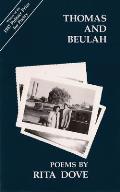
Poem: Gospel by Rita Dove

Who says you can't read/post poetry AFTER Poetry Month? Particularly something as delicious as this one, by former Poet Laureate Rita Dove, from her 1987 Pulitzer Prize winning collection Thomas and Beulah?

Note to poets and other writers: Rumor has it that Thomas and Beulah was rejected by numerous publishers before being picked up by Carnegie Mellon....so keep writing and hang in there!


Gospel


Swing low so I
can step inside


a humming ship of voices
big with all

the wrongs done
done them.
No sound this generous
could fail:

ride joy until
it cracks like an egg,
make sorrow
seethe and whisper.

From a fortress
of animal misery
soars the chill voice
of the tenor, enraptured

with sacrifice.

What do I see,

he complains, notes
brightly rising

towards a sky
blank with promise.
Yet how healthy
the single contralto

settling deeper
into her watery furs!
Carry me home,
she cajoles, bearing

down. Candelabras
brim.  But he slips
through God’s net and swims
heavenward, warbling.

from Thomas and Beulah (Carnegie Mellon Univ Press, 1986)


And a heads up for those in the New York area (h/t thanks to the Poetry Society of America)


Friday, May 4, 7:30pm

Queens, NY

POETS IN THE PLAYHOUSE:
Rita Dove's Thomas and Beulah

Poets in the Playhouse, brings  poetry from page to stage, beginning with a theatrical staging by students of Thomas and Beulah, the Pulitzer prize-winning collection by Rita Dove at Queens College with a theatrical staging by students. Introduced by Darrel Alejandro Holnes.

Co-sponsored by the MFA Program in Creative Writing and Literary Translation and the Department of Drama, Theatre & Dance.
The Little Theater at Queens College
King Hall, Room 115
65-30 Kissena Blvd
Flushing, New York


30 April 2012

Poem: canvas and mirror by Evie Shockley

I have a weakness for poetic self-portraits, particularly those that play with the idea of how one describes anything (I still get a thrill from Michael Palmer's "Autobiography" which begins 'All clocks are clouds.' WTF?!? LOL! :)

In honor of Poetry Month and our Alma Mater Cave Canem, here is a poem from the wonder-filled work of Evie Shockley (whose critical work,  Renegade Poetics: Black Aesthetics and Formal Innovation in African American Poetry is a must read

canvas and mirror


self-portrait with cats, with purple, with stacks
      of half-read books adorning my desk, with coffee,

                  with mug, with yesterday's mug. self-portrait
            with guilt, with fear, with thick-banded silver ring,

      painted toes, and no make-up on my face. self-
            portrait with twins, with giggles, with sister at

                  last, with epistrophy, with crepescule with nellie,
with my favorite things. self-portrait with hard

head, with soft light, with raised eyebrow. self-
      portrait voo-doo, self-portrait hijinks, self-portrait

                  surprise. self-portrait with patience, with political
            protest, with poetry, with papers to grade. self-

      portrait as thaumaturgic lass, self-portrait as luna
            larva, self-portrait as your mama. self-portrait

                  with self at sixteen. self-portrait with shit-kickers,
with hip-huggers, with crimson silk, with wild

mushroom risotto and a glass of malbec. self-
      portrait with partial disclosure, self-portrait with

                  half-truths, self-portrait with demi-monde. self-
            portrait with a night at the beach, with a view

      overlooking the lake, with cancelled flight. self-
            portrait with a real future, with a slight chance of

                  sours, with glasses, with cream, with fries, with
a way with words, with a propositional phrase


27 April 2012

Poem: Our Tears are Sweet by Simin Behbahni

Simin Behbahni (b. 1927)
Simin Behbahni is a prominent contemporary Persian poets. Although she is considered Iran's national poet (The Lioness of Iran) that country denied her a travel permit in 2010 as she was boarding a plane to Paris.
Audio of Behbahni reading her work can be found on the NPR website here

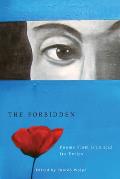
This poem is from the new anthology, The Forbidden: Poems from Iran and Its Exiles, edited by Sholeh Wolpé, who I had the great pleasure of meeting at this year's AWP Conference in Chicago.


Our Tears Are Sweet


Our tears are sweet, our laughter venomous.
We're pleased when sad, and sad when pleased.
We wash one hand in blood, the other we wash the blood off.
We cry as we laugh at the futility of both these acts.
Eight years have passed, we haven't discovered their meaning.
We have been like children, beyond any account or accounting.
We have broken every stalk, like a wind in the garden.
We have picked clean the vine's candelabra.
And if we found a tree, still standing, defiantly, 
we cut its branches, we pulled it by the roots.
We wished for a war, it brought us misery,
now, repentant, we wish for peace.
We pulled wings and heads from bodies,
now, seeking a cure, we are busy grafting.


Will it come to life, will it fly,
the head we attach, the wing we stitch?


translated by Farzaneh Milani and Keveh Safa
from The Forbidden: Poems from Iran and Its Exiles, edited by Sholeh Wolpé (Michigan State University Press, 2012)

26 April 2012

C. P. Cavafy: Three translations of "The City"

Constantine Petrou Photiades Cavafy (1863 - 1932)
Happy Poem in Your Pocket Day! In addition to carrying around the poems Poets House are handing out today, many written by 3rd and 6th graders from PS 89 and I. S. 289 about the neighborhood, I also have Edmund Keely's Essential Cavafy, one of my favorite 'little books.' Here is Cavafy's "The City," first, the original, from the Cavafy Archive website then two translations.

Note from George Kalogeris: "In the original, all the rhymes are full rhymes, the pattern is a-b-b-c-c-d-d-a, and the first and last line of each stanza rhymes variations of the word for “sea” (thalassa) and for “wasted” (xalassa)."


Η Πόλις
                                                                                                                                                                                                   
Είπες· «Θα πάγω σ’ άλλη γη, θα πάγω σ’ άλλη θάλασσα.
Μια πόλις άλλη θα βρεθεί καλλίτερη από αυτή.
Κάθε προσπάθεια μου μια καταδίκη είναι γραφτή·
κ’ είν’ η καρδιά μου — σαν νεκρός — θαμένη.
Ο νους μου ως πότε μες στον μαρασμόν αυτόν θα μένει.
Όπου το μάτι μου γυρίσω, όπου κι αν δω
ερείπια μαύρα της ζωής μου βλέπω εδώ,
που τόσα χρόνια πέρασα και ρήμαξα και χάλασα.»

Καινούριους τόπους δεν θα βρεις, δεν θάβρεις άλλες θάλασσες.
Η πόλις θα σε ακολουθεί. Στους δρόμους θα γυρνάς
τους ίδιους. Και στες γειτονιές τες ίδιες θα γερνάς·
και μες στα ίδια σπίτια αυτά θ’ ασπρίζεις.
Πάντα στην πόλι αυτή θα φθάνεις. Για τα αλλού — μη ελπίζεις—
δεν έχει πλοίο για σε, δεν έχει οδό.
Έτσι που τη ζωή σου ρήμαξες εδώ
στην κώχη τούτη την μικρή, σ’ όλην την γη την χάλασες. 


The City


You said: “I’ll go to another country, go to another shore,
find another city better than this one.
Whatever I try to do is fated to turn out wrong
and my heart lies buried like something dead.
How long can I let my mind moulder in this place?
Wherever I turn, wherever I look,
I see the black ruins of my life, here,
where I’ve spent so many years, wasted them, destroyed them totally.”

You won’t find a new country, won’t find another shore.
This city will always pursue you.
You’ll walk the same streets, grow old
in the same neighborhoods, turn gray in these same houses.
You’ll always end up in this city. Don’t hope for things elsewhere:
there’s no ship for you, there’s no road.
Now that you’ve wasted your life here, in this small corner,
you've destroyed it everywhere in the world

from C.P. Cavafy: Collected Poems (Princeton University Press, 1992)   
translated By Edmund Keeley and Philip Sherrard
        

The City

    You said: “I’ll go to another land, I’ll go to another sea.
I'll find a city better than this one.
My every effort is a written indictment,
and my heart — like someone dead — is buried.
How long will my mind remain in this decaying state.
Wherever I cast my eyes, wherever I look,
I see my life in black ruins here,
where I spent so many years, and ruined and wasted them.”

You will not find new lands, you will not find other seas.
The city will follow you. You will roam
the same streets. And you will grow old in the same neighborhood,
and your hair will turn white in the same houses.
You will always arrive in this city. Don’t hope for elsewhere -
there is no ship for you, there is no road.
As you have wasted your life here,
in this small corner, so you have ruined it on the whole earth.

translated by Aliki Barnstone


The City

    You said: “I’ll go to some other land, I’ll go to some other shore.
There’s bound to be another city that’s better by far.
My every effort has been ill-fated from the start;
my heart — like something dead — lies buried away;
How long will my mind endure this slow decay?
Wherever I look, wherever I cast my eyes,
I see all round me the black rubble of my life
where I’ve spent so many ruined and wasted years.”

You’ll find no new places, you won’t find other shores.
The city will follow you. The streets in which you pace
will be the same, you’ll haunt the same familiar places,
and inside those same houses you’ll grow old.
You’ll always end up in this city. Don’t bother to hope
for a ship, a route, to take you somewhere else; they don’t exist.
Just as you’ve destroyed your life here, here in this
small corner, so you’ve wasted it through all the world

from C. P. Cavafy: Collected Poems (Knopf, 2009)
translated by Daniel Mendelsohn


25 April 2012

Four Sisters from Zakaria by Ghassan Zaqtan

Continuing Poetry in Translation Week, here is a poem by Palestinian Poet Ghassan Zaqtan. He was supposed to give a reading at Poets House a few weeks ago, as part of his US tour to promote a new book of English translations of his work, but could not get a visa. We went ahead with the program, with his translator poet and doctor Fady Joudah reading and translating some of the work featured on a recent YouTube video Zaqtan made once it became evident that he would not be traveling to the U.S.
Ghassan Zaqtan

Joudah also talks about talks about translating him here.

You can hear this and another poem in both English and Arabic here at the PBS website. PBS'  video of him reading is here.

* Zakaria and Artouf are two Palestinian villages in the Khalil (Hebron) area whose occupants were forced to leave in 1948.

Four sisters from Zakaria
Four sisters 
climb the hill alone 
in black clothes. 
Four sisters sigh 
facing the thicket. 
Four sisters in the dark 
read wet letters. 
A train coming 
from Artouf passed 
behind the picture. 
A horse carrying 
a girl from Zakaria
neighs on the ridge 
across the plain. 
In the gorge 
clouds slowly pass. 
Four sisters 
from Zakaria, alone 
in black clothes 
on the hill.


Four sisters from Zakariyya
Four sisters climb the mountain
alone 
in black clothes. 

Four sisters sigh in front of the grove.

Four sisters in the dark 
reading soaked letters.

There was a train
behind the photo passing from Artouf.
There was a horse
carrying a girl from Zakariyya
whinnying in the slope behind the plains. 

And the clouds were slowly passing
through the canyon.

Four sisters from Zakariyya
by the hill
alone 
in black clothes.


20 April 2012

A.E. Stallings -- Extinction of Silence


In honor of GLSEN (The Gay, Lesbian & Straight Education Network) and today's "Day of Silence" to draw attention to the anti-LGBTQ name-calling, bullying and harassment in schools, a poem by the immensely talented translator and formalist poet A. E. Stallings.


Extinction of Silence

A. E. Stallings
That it was shy when alive goes without saying.
We know it vanished at the sound of voices

Or footsteps. It took wing at the slightest noises,
Though it could be approached by someone praying.

We have no recordings of it, though of course
In the basement of the Museum, we have some stuffed

Moth-eaten specimens—the Lesser Ruffed
And Yellow Spotted—filed in narrow drawers.

But its song is lost. If it was related to
A species of Quiet, or of another feather,

No researcher can know. Not even whether
A breeding pair still nests deep in the bayou,

Where legend has it some once common bird
Decades ago was first not seen, not heard.

from Poetry (February 2006)

Three Poems by Olav Hauge

Ur...Olav...Who?

In the Orchard: Olav H. Hague (1908 - 1994) 
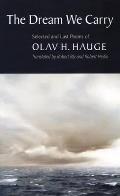
Not the E. E. Cummings poem (and that's Olaf anyway), but a Norwegian poet who spent his entire life on a farm in the small town of Ulvik. In addition to his own poems, he translated English, French, and German poets into his native language, and was influenced by classical Chinese poetry.

Many thanks to Copper Canyon Press and their selection of his poems The Dream We Carry for introducing me to this quietly beautiful writer.

I Have Three Poems

I have three poems,
he said.
Who counts poems?
Emily tossed hers
into a trunk. I
doubt if she counted them,
she simply opened another tea bag
and wrote a new one.
That was right. A good poem
should smell of tea.
Or of raw earth and freshly cut wood.

(Translated by Robert Hedin)


To My Fingers

Oh, you fingers,
how many hours you've had
to slave for a cold brain
and a dead body!
And if I didn't write then
you would take to whispering.
Didn't the poems become good then!
When you were speaking with tongues of fire!

(Translated by Robert Hedin)


The Dream

Let us slip into
sleep, into
the calm dream,
just slip in - two bits
of raw dough into the
good oven
that we call night,
and so to awake
in the morning as
two sound
golden loaves!

(Translated by Robert Bly)


from The Dream We Carry: Selected and Last Poems of Olav H. Hauge (Copper Canyon Press, 2008)

19 April 2012

Muriel Rukeyser -- Effort at Speech Between Two People

I am not sure how I first discovered the work of Muriel Rukeyser - probably through her wonderful Life of Poetry (which reminds me - it's time to re-read that...again), and then to the poetry. The best place to start looking at her poetic work is probably the Adrienne Rich-edited Selected Poems from the Library of America's American Poets Project Series. It's also difficult not to think about Rich herself as she speaks about Rukeyser's "claiming her right to intellect and sexuality, poetry and science, Marxism and myth, activism and motherhood, theory and vision..."

Muriel Rukeyser (1913-1980)


Effort at Speech Between Two People

:  Speak to me.   Take my hand.   What are you now?
   I will tell you all.   I will conceal nothing.
   When I was three, a little child read a story about a
         rabbit 
   who died, in the story, and I crawled under a chair   : 
   a pink rabbit   :   it was my birthday, and a candle
   burnt a sore spot on my finger, and I was told to be 
         happy.

:   Oh, grow to know me.    I am not happy.    I will be
         open: 
   Now I am thinking of white sails against a sky like
         music, 
   like glad horns blowing, and birds tilting, and an arm
         about me. 
   There was one I loved, who wanted to live, sailing.

 :  Speak to me.   Take my hand.   What are you now? 
   When I was nine, I was fruitily sentimental, 
   fluid   :    and my widowed aunt played Chopin, 
   and I bent my head to the painted woodwork, and wept. 
   I want now to be close to you.   I would 
   link the minutes of my days close, somehow, to your
         days.

 :  I am not happy.   I will be open. 
    I have liked lamps in evening corners, and quiet
         poems. 
   There has been fear in my life.   Sometimes I
         speculate 
   On what a tragedy his life was, really.

 :  Take my hand.    Fist my mind in your hand.   What
         are you now? 
   When I was fourteen, I had dreams of suicide, 
   and I stood at a steep window, at sunset, hoping
         toward death    :
   if the light had not melted clouds and plains to
         beauty, 
   if light had not transformed that day, I would have
         leapt. 
   I am unhappy. I am lonely. Speak to me.

 :  I will be open.    I think he never loved me: 
   he loved the bright beaches, the little lips of foam 
   that ride small waves, he loved the veer of gulls: 
   he said with a gay mouth: I love you.   Grow to
         know me.

 :  What are you now?   If we could touch one another, 
     if these our separate entities could come to grips, 
   clenched like a Chinese puzzle . . . yesterday 
   I stood in a crowded street that was live with people, 
   and no one spoke a word, and the morning shone. 
   Everyone silent, moving . . . Take my hand.
         Speak to me.


18 April 2012

Jennifer Wallace: In love

A quick poetic trip back home to Baltimore, thanks to poet, editor and educator Jennifer Wallace and her new book of poetry and photographs "that search for the place of self and the collective (human and nonhuman) in Baltimore’s urban ecosystem" It Can Be Solved By Walking, a part of her longer project titled "Shining Like the Sun" ("Using a variety of methods and media, the project investigates historical, psychological, ecological and social phenomena, and seeks to render the linkages between these ideas and the mingling of site and self") after Thomas Merton's quote "There is no way of telling people that they are all walking around shining like the sun."


In the interest of Full Disclosure, I was sent a pre-pub galley of the book and asked to blurb it, and was happy to do so. Both the visuals and the writing captured so much of the difficult beauty that is B-more.


In love 
because the city won’t let up
no matter how much rocking.
In love with this city
as if a surprise walked through the door
wearing suspenders and red-striped pants.
In love with the intersection
and its ingenious abutment of asphalt and grit
where chicory roots in their joining 
and age-old rainwater bubbles in the gutter,
bobbing toward the harbor and the sea.
In love with the difficult stories
because they are not mine, because they are mine.
The just-after-dawn light 
like Caravaggio’s on the row house bricks.


from the Street Corner series (Preston & Greenmount) by Jennifer Wallace  

It Can Be Solved By Walking (CitLit Press, 2012)

17 April 2012

Kay Ryan: Poetry and Money

Since April 15th fell on a Saturday, Tax Day was a little later this year, Monday the 16th. In honor of the almighty dollar, here is former US Poet Laureate Kay Ryan, re-writing Wallace Stevens' "Money is a Kind of Poetry" quote...


Poetry is a Kind of Money


Poetry is a kind of money
whose value depends upon reserves.
It's not the paper it's written on
or its self-announced denomination,
but the bullion, sweated from the earth
and hidden, which preserves its worth.
Nobody knows how this works,
and how can it? Why does something
stacked in some secret bank or cabinet,
some miser's trove, far back, lambent,
and gloated over by its golem, make us
so solemnly convinced of the transaction
when Mandelstam says gold, even
in translation?

from The Best of It: New and Selected Poems (Grove Press, 2010)

16 April 2012

Happy Birthday Essex

In celebration of the birthday today of the divine Essex Hemphill, a poem perfect for our current economic times. Please note: for the perfect "Hemphillian" reading of this poem, the " - " before the last word should be read as a "Snap!" 

Black Beans


Times are lean,
Pretty Baby,
the beans are burnt
to the bottom
of the battered pot.
Let's make fierce love
on the over-stuffed,
hand-me-down sofa.
We can burn it up, too.
Our hungers
will evaporate like-money.
I smell your lust,
not the pot burnt black
with tonight's meager meal.
So we can't buy flowers
for our table
Our kisses are petals,
our tongues caress the bloom.
Who dares to tell us
we are poor and powerless?
We keep treasure
any king would count as dear.
Come on, Pretty Baby.
Our souls can't be crushed
like cats crossing streets too soon.
Let the beans burn all night long.
Our chipped water glasses are filled
with wine from our loving.
And the burnt black beans-
caviar

from Ceremonies: Prose and Poetry (Cleis Press, 2000)


13 April 2012

Tim Seibles: Mad Poets Villanelle


I had the great pleasure this week -- after much too long a time -- of attending reading by Tim Seibles from his first book in eight years, Fast Animal. I admit to being a huge fan of his reworkings of popular culture - his Bugs Bunny, Road Runner and "Boris and Natasha" poems, from Hurdy-Gurdy and Hammerlock, for example. There are some stunners in the voice of Blade, The Daywalker in the new collection as well...but here's something to and for us crazy-a** versifiers to help us celebrate Poetry Month

Mad Poets Villanelle


The sunrise is nice, but the nightside is bad
When light breaks the dawn, a black sky turns blue
I think I know why certain poets go mad

I once rode the cosmos in a suit stitched in plaid
The Earth was my space ship and me, the rough crew
The big light was nice; but the nightside was bad

I can't understand why I can't understand
They learned m some books and their churchery too
It's pretty damn clear why the poets turn mad

It's a bootieful life! Shouldn't sex make us glad?
But the first touch of lips brings the turn of the screw
The first light's good light, but the blindside is bad

Be all you can be like it says in the ad
And do a few things that the Janjaweed do
You can see why the sweet poets run mad

Sometimes I think I've been totally had
I fell for this life 'cause I thought life was true
The daylight's alright, but the sunset is sad

It looks like this chance is all that I had
I say to the mirror, That just can't be you
I guess I see why half the people go mad

Maybe if I could just talk to my Dad:
Didn't it seem like your dream would come true?
The sunrise is nice, but the blindside is bad
I think I know why certain poets go mad
 -- from Fast Animal by Tim Seibles (Etruscan Press, 2012)


Poem: Camille Dungy for Adrienne Rich

Camille, on the Red Carpet at the NAACP Image Awards - You !GO! Girl
Continuing the libations for the late Adrienne Rich, here is poet Camille Dungy's bouquet to the great poet and essayist. Also check out VIDA: Women in the Literary Arts for their short essay series, "21 Love Poems to Adrienne Rich"


Arthritis is one thing, the hurting another

.............................for Adrienne Rich in 2006 
   

The poet's hands degenerate until her cup is too heavy.

You are not required to understand.
This is not the year for understanding.

This is the year of burning women in schoolyards
and raided homes, of tarped bodies on runways and in ......restaurants.

The architecture of the poet's hands has turned upon itself.

This is not the year for palliatives. It is not the year for ......knowing what to do.

This is the year the planet grew smaller
and no country would consent to its defeat.

The poet's cup is filled too full, a weight she cannot carry
from the table to her mouth, her lips, her tongue.
The poet's hands are congenitally spoiled.

This is not one thing standing for another.

Listen, this year three ancient cities met their ruin, maybe ......more,
and many profited, but this is not news for the readers here.

Should I speak indirectly?
I am not the poet. Those are not my hands.

This is the year of deportations and mothers bereaved
of all of their sons. The year of third and fourth tours,
of cutting-edge weaponry and old-fashioned guns.

Last year was no better, and this year only lays the ......groundwork
for the years that are to come. Listen, this is a year like no ......other.

This is the year the doctors struck for want of aid
and schoolchildren were sent home in the morning

and lights and gas were unreliable
and, harvesters suspect, fruit had no recourse but rot.

Many are dying for want of a cure, and the poet is patient
and her hands cause the least of her pain.


-Camille T. Dungy      

From Smith Blue (Southern Illinois University Press, 2011) 

Followers