24 January 2013

Conditioning, or Pavlov's Dog Goes to the Movies

Last week, I had the pleasure to attend a screening of Middle of Nowhere, the new film by director Ava Duvernay staring newcomer Emayatzy Corinealdi, Omari Hardwick, David Oyelowo and Lorraine Toussaint.

I really enjoyed it. The performances were uniformly good and film has it's own relaxed pace and a beautiful understated quality. I was also impressed by the writing, which I thought was very good and very 'real.' The characters talked the way people actually talk, and nothing seemed forced, which was a great pleasure to luxuriate in.

But one interesting thing that both the friend who invited me (thanks Bernie!) and I commented on afterwards is how we 'kept expecting something to happen.' This is a movie with no gunshots, no drive-bys, no explosions. It is disturbing to realize this, but sadly, we've been conditioned to expect these things when going to the movies - and particularly to movies staring African-American characters.

It bothers me no end that I have fallen for this, to expect to see violence on screen when I watch a movie, or a television show. It disturbs me that a plot point or the resolution of a problem comes so often accompanied by a gun shot, explosion, or the throwing of a fist, that I've been trained to expect to see that all the time, in nearly every show. Many of us, myself included, are so used to 'sensation', spectacle, quick cuts and fast pacing, that a film or TV show that has its own pace, that takes its time, can feel 'slow,' that 'nothing is happening' on screen (I am glad to have seen Nowhere in a theater so that I could be enveloped in it, as opposed to at home on DVD where I may not have given myself up to it as much).

And of course the possibility of violence seems to always lurking when Black characters appear in a movie. Many years ago I read an article that noted how many African-American characters on television have a relationship with the criminal justice system - either as cops or criminals. Part of that is a function of there being so many cop/mystery shows on TV, but much of it also is the LACK of Blacks as regular characters on non-cop shows. We tend to be associated with crime (on both sides of the line) - so is it any wonder that there is this fear of (in particular young) black people in the real world? See enough negative images and one begins to expect things to 'jump off.'

So I am very grateful to the makers of Middle of Nowhere for slowing me down, allowing me to rest for a while in their world, and above all helping me to realize that something not very pleasant that has been happening to me - that I have been turned into a well conditioned test subject. Thank you for helping me to recognize this, and helping me to truly see.


09 January 2013

Inaugural poet Richard Blanco

Richard Blanco, Poet, Cuban-American, Gay, Inauguration, Obama
Richard Blanco (photo by Nico Tucci)
I was planning on putting a poem on the blog today, anyway - then early this morning news came down that gay Cuban American poet Richard Blanco had been chosen to read an original poem at President Obama's Inauguration on January 21st! I've known his work since his Agnes Lynch Starrett Prize-winning debut, City of a Hundred Fires (1998), and so am completely thrilled by this news, and am anxious to hear what he has written to present to the nation.

I am also expecting some backlash - 'Obama is catering to his gay base, he's playing the Latino card, this is more about Identity Politics than the Art of Poetry' and other forms of similar BS. Blanco's work is strong enough to stand such petty, 'Sour Grapes' sniping.

PS: As a friend mentioned on Facebook last night, for those keeping partisan score at home, in the Inaugural Poet category that's

Democrats 5, Republicans 0

(Robert Frost, Kennedy; Maya Angelou and Miller Williams, Clinton; Elizabeth Alexander and Richard Blanco, Obama)


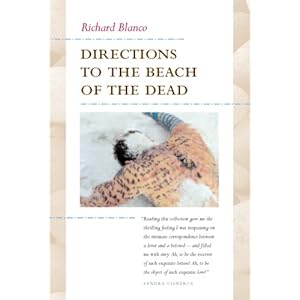
Here's a prose poem by Richard Blanco, that is part of our One City, Many Poems initiative here at Poets House. Hear him read this poem on his website

Mexican Almerzo in New England

for MG

Word is praise for Marina, up past 3:00 a.m. the night before her flight, preparing and packing the platos tradicionales she's now heating up in the oven while the tortillas steam like full moons on the stovetop. Dish by dish she tries to recreate Mexico in her son's New England kitchen, taste-testing el mole from the pot, stirring everything: el chorizo-con-papas, el picadillo, el guacamole. The spirals of her stirs match the spirals in her eyes, the scented steam coils around her like incense, suffusing the air with her folklore. She loves Alfredo, as she loves all her sons, as she loves all things: seashells, cacti, plumes, artichokes. Her hand waves us to circle around the kitchen island, where she demonstrates how to fold tacos for the gringo guests, explaining what is hot and what is not, trying to describe tastes with English words she cannot savor. As we eat, she apologizes: not as good as at home, pero bueno. . . It is the best she can do in this strange kitchen which Sele has tried to disguise with papel picado banners of colored tissue paper displaying our names in piñata pink, maíz yellow, and Guadalupe green--strung across the lintels of the patio filled with talk of an early spring and do you remembers that leave an after-taste even the flan and café negro don't cleanse. Marina has finished. She sleeps in the guest room while Alfredo's paintings confess in the living room, while the papier-mâché skeletons giggle on the shelves, and shadows lean on the porch with rain about to fall. Tomorrow our names will be taken down and Marina will leave with her empty clay pots, feeling as she feels all things: velvet, branches, honey, stones. Feeling what we all feel: home is a forgotten recipe, a spice we can find nowhere, a taste we can never reproduce, exactly.

from Directions to the Beach of the Dead (University of Arizona Press, 2005)

03 January 2013

Welcome 2013 / 2012's Books

Happy New Year!

I resolutely refuse to make New Years Resolutions....but one of the things I hope to do this year is be more regular with posts here on the blog. Of course with Facebook, Twitter, and other forms of social networking, blogging is now SO 2005, and may soon be going the way of the typewriter and snail mail. But since I still send cards and notes via US Mail, I guess I'll stay back here in the dark ages for a while longer.

I recently mentioned to a friend (via Tweet of course!) that I read over 60 books in 2012. Actually looking at my list of titles, I managed to hit 70 before 1/1/13 (With a push I might have made it to 71, but I finished Colm Toibin's luminous Testament of Mary on New Years morning.)

Hello, my name is Reggie, and I am a book-a-holic.

Yes, I am one of those people who can read more than one book at a time - so long as they are sufficiently different. I often have a fiction and a non-fiction book going at the same time, unless one totally grabs me and I can't put it down. Reading poetry takes me LONGER to read than other forms of writing, so a 'slim volume of verse' may take me a while to get through. I also write reviews, and have been on the judging panel for book awards in recent years, so that ups my numbers. The real secret, however, is having a healthy commute - 45 mins each way on the NYC subway for reading every weekday to and from work. That undivided time has greatly increased my ability to devour books. As the marvelous Underground New York Public Library tumblr site shows, I'm not the only one. Sorry, Baltimore - New York is "The City That Reads!"

Ms. Donalay Thomas reading "Resurrecting Midnight" by Eric Jerome Dickey on the A Train (NYTimes 9/6/2009).
It is also amazing to see the incredible range of books people around me are reading, which goes far beyond the usual best sellers list (Although in 2011 it did seem as though *everyone* was making their way through  Stieg Larsson’s Millennium trilogy). One of the negative things about e-readers I feel is that while it increases privacy it masks what you are reading, making the act of reading in public less social. Everyone is curious about other people's books, whether they are on the lookout for the next thing to read, or so they can recall their experience reading that title, or so they can wonder "Why on earth are they reading that!?!"

My reading tends to be pretty random. I do have favorite authors and a couple of them (see Winterson, Delany and Schulman, below) came out with new books in 2012. Every now and then you'll catch me with a best seller; more often than not I'm in the middle of something a little older, or something I 'should have read' a long time ago. I may try to keep up with new poetry, but otherwise it's difficult to predict what I may be reading.

Rather than the ubiquitous "Top 10 List," here almost in the order that I encountered them during the year are a few of the books that really stood out for me. And yes, I know I'm being too coy by half in not mentioning poetry...so sue me!

Paul Russell - The Unreal Life of Sergey Nabokov
Colm Toibin - The Empty Family: Stories
Jeanette Winterson - Why Be Happy When You Could Be Normal?
Keith Haring - Journals
Samuel R Delany - Through the Valley of the Nest of Spiders
Sarah Schulman - The Gentrification of the Mind: Witness to a Lost Imagination
Martin A Lee - Smoke Signals: A Social History of Marijuana - Medical, Recreational and Scientific
George Lois - Damn Good Advice (For People with Talent)
Valerie Martin - Property
David Byrne - How Music Works
Ayana Mathis - The Twelve Tribes of Hattie

15 July 2012

Proud / Out


"Once upon a time, we were for gay liberation...That's a big word. . . . Equality is a small word and a small concept. It's just accepting what little piece everyone else has...." -- Bill Dobbs

I've wanted to write something about Pride this year, but "Gay" News keeps on coming. So I better do it now


This was the first NYC Pride I've been to since I moved here from Baltimore, and we managed to go to events in three boroughs: Queens, Brooklyn, and Manhattan, as well as the "Leather Pride" event, Folsom East. Staten Island's Pride was the same day as Queens, and The Bronx's event is coming up in July - and, sadly, we missed Harlem Pride this year as well.

Martha Wash at Queens Pride
Brooklyn's event was more of a Street Fair (although we didn't stick around for the evening parade), as was Queen's Pride for the most part - although Queens capped off the day with a wonderful but too short performance by Martha Wash (although we did get to say hello as she rode by in a chauffeured Cushman after the performance, which was a thrill). As a friend who lives in Harlem said about Pride there, for many it was like a reunion or family day, where you get to meet people you haven't seen in a long time, hang out with friends, and have fun (Baltimore's Black Pride Block Party was like this for me. In fact there's someone who we invariably would ONLY see there every year)

The "Big Pride" in Manhattan on the last Sunday in June was, as could be expected, more of a mob scene. One aspect of it, however, was particularly troubling. The Christopher Street area and the waterfront along West Street/The West Side Highway below it has traditionally been a place for young gays to gather. This year, it was nearly impossible to get to "The Piers." Streets - including Christopher - were blocked and limited numbers of people were allowed to get down to West Street. It took some people we knew who went to Rockbar almost an hour to get there, for example.

Once you did manage to get to and across West Street, only a strip of the walkway was open and available to revelers. Benches and the running and cycling track were blocked. There was very little room for people to do more than just slowly walk up and down along the river. As someone who has fond memories of the Pier area before 'renovation' (and spent the evening of Stonewall 25 in 1994 up all night sitting by the Hudson) this felt tragic to me. Even The High Line was closed on Pride Sunday, I'm assuming to prevent partiers from taking that area over as well. Friends who were in Manhattan for Pride last year also say that this year was much more cordoned off and constrained than in 2011.

I can't help but wondering if part of the reason for what I can only call mistreatment or mismanagement of one of the largest events in New York City had something to do with race, class, and age.

The crowds in The Village, along Christopher, Washington, West Streets and the Pier area were overwhelmingly Black and Brown. One can't make generalizations about people's economic status at a glance, but I'd estimate that most were Middle to Working Class, who wanted to enjoy the day inexpensively (ie not at a bar or club that very likely had increased prices or cover charges specifically for Pride). I'd estimate 60 - 80% of the people on the streets in the West Village were under the age of 35.

What does it mean when The City/we treat the Next Generation of LGBTQ people in this manner? It felt very obvious to me that those of us in the streets that day were not wanted in that area. The obstacles felt like a form of harassment, of disrespect, a way of saying "Go back where you belong." It disgusted me.

One of the post-Stonewall triumphs of the Gay Rights Movement was to create safe spaces for 'Queer" people to live, work, and gather. In a Gay variation on "Stadtluft macht frei" - City Air makes you Free , being in places like The Village, "Boys Town," Dupont Circle, The Castro, and others gave gays and lesbians a place to live their lives openly and without fear. And gays were quick to inform straights who came into those areas that this was Our space, not theirs.

Now these spaces were never Paradise, particularly if you were a person of color: they were and remain overwhelmingly white. But for the most part we understand how to navigate a majority white world (having had to do that all our lives anyway). The chance to be with others like ourselves, to hold our boy or girl friends hand in the streets, was (and is) worth putting up with some racial crap.

It seems to me that The Village and other spaces like this still hold that promise of freedom for many young LGBTQs, and for same gender loving people of color as well. We flock to these areas because they are our spaces too. We also want to breathe the air of these cities created by our LGBTQ foreparents, as a way to thank them for creating them, enjoy what they fought for, and to keep the space open for those who come after us. The kind of disrespect and herding of that mainly young, mainly minority, crowd on Pride Day Sunday flies in the face of that idea of freedom. The City of New York, and organizers of NYC Pride, should be ashamed of themselves for what they did to this huge segment of our population.

@ Folsom East


The big post-Pride news has been about coming out, with Anderson Cooper leaving his 'glass closet,' and singer Frank Ocean revealing that one of his first loves was another man. For some (particularly here in New York where its standard to adopt an  "Everybody Knew" attitude, Cooper's admission was no big deal. But I thought his statement, particularly this section, was very good:

It’s become clear to me that by remaining silent on certain aspects of my personal life for so long, I have given some the mistaken impression that I am trying to hide something - something that makes me uncomfortable, ashamed or even afraid. This is distressing because it is simply not true.
 
I’ve also been reminded recently that while as a society we are moving toward greater inclusion and equality for all people, the tide of history only advances when people make themselves fully visible. There continue to be far too many incidences of bullying of young people, as well as discrimination and violence against people of all ages, based on their sexual orientation, and I believe there is value in making clear where I stand.

The fact is, I'm gay, always have been, always will be, and I couldn’t be any more happy, comfortable with myself, and proud.

I have always been very open and honest about this part of my life with my friends, my family, and my colleagues. In a perfect world, I don't think it's anyone else's business, but I do think there is value in standing up and being counted. 

In large part, this is the way most of us live our lives, I think. We're 'out' to those we are close to and need to be honest with, and its none of anyone else's business. Pride gatherings do allow us to add our number to the thousands of others like ourselves, show support, and cavort in the streets for a while. Then we go back to work and the ordinariness of our lives the next day. 

Frank Ocean's 'coming out' is something different, more complicated. My reading of his statement indicates that Frank has 'come out' as possibly bisexual, not 'Gay' in the way we now take such admissions to indicate which side we are on in the 'never the twain shall meet' camps of either One Thing or The Other. I was an remain very moved by his revealing that he fell in love with another man when he was 19, and that while something physical may or may not have happened, his feelings were not reciprocated by the other man, and that he couldn't tell Ocean that he felt the same way until three years later. That kind of heartbreak is something most if not all of us have been through, particularly as teenagers.

Frank Ocean - who, I'll admit, I'd never even heard of before his statement broke - is to be commended for his honesty, and for being so brave to admit his vulnerability. And for writing and performing songs where he does not change the gender of his love object, as so many closeted performers have done in the past. One would hope his honesty, and the increasing discussion of the centrality of same-gender-loving people to black music (cf. Anthony Heilbrun "It is impossible to understand the story of black America without foregrounding the experiences of the gay men of gospel") will lead to greater openness by others, and a sea change in the music business. But it is WAY to early to tell about that.

Quick aside relating Ocean and Heilbrun - looking at the lyrics of "Bad Religion" it's easy to see the lines "I could never make him love me"  and It's a bad religion / To be in love with someone / Who could never love you not only as relating to the man he fell in love with, but also to a God who rejects who you really are. Millennium approaches?


But then, for some "Gay Pride" isn't what it used to be, anyway. As reporter Steven Thrasher wrote in a long article in the Pride issue of The Village Voice, Does Gay Inc Believe in Free Speech?, our current large scale Gay Rights Organizations ("Gay Inc) are more interested in remaining connected to corporations than the interests of the 'average' LGBTQ person. And the drive for liberation and freedom of expression for all peoples - gay, bi, straight, 'fluid', 'don't like labels', etc - has given way to the hazy notion of 'tolerance.'  Rather than being seen as threatening, in the current climate we are just another consumer group to be catered to (Target notwithstanding - for now), as Kraft and its "Gay Oreo" knows quite well. That wasn't quite what I was hoping for, back in my youthful days of Marching on Washington. I still have a much broader vision of the future we should be working toward.


"Never once did Martin Luther King Jr. use the word tolerance in his speeches, says Slavoj Žižek. "For him (and he was right) it would have been an obscenity to say white people should learn to tolerate us more." The goal of the Civil Rights Movement was not simply appealing to liberal magnanimity, but demanding equity, including economic equity. Tolerance is a request that represents a retreat from that ambitious vision. When King marched on Washington D.C., he didn't say, "learn to live with us." He said, "We're here to cash a check":

One hundred years [after the Emancipation Proclamation], the Negro still is not free. One hundred years later, the life of the Negro is still sadly crippled by the manacles of segregation and the chains of discrimination. One hundred years later, the Negro lives on a lonely island of poverty in the midst of a vast ocean of material prosperity. One hundred years later, the Negro is still languishing in the corners of American society and finds himself an exile in his own land. So we have come here today to dramatize a shameful condition. In a sense we have come to our nation's capital to cash a check. 
Rainbow over the closing of Queens Pride

27 June 2012

Poem: As once the winged energy of delight by Rilke

Was moving some papers this morning and ran across a copy I'd made of this poem by the glorious Rainer Maria Rilke. As happens whenever I encounter Rilke's work, I read this poem over and over again, and it has been haunting me all day.


As once the winged energy of delight
carried you over childhood’s dark abysses,
now beyond your own life build the great
arch of unimagined bridges.

Wonders happen if we can succeed
in passing through the harshest danger;
but only in a bright and purely granted
achievement can we realize the wonder.

To work with Things in the indescribable
relationship is not too hard for us;
the pattern grows more intricate and subtle,
and being swept along is not enough.

Take your practiced powers and stretch them out
until they span the chasm between two
contradictions… For the god
wants to know himself in you.

from Ahead of All Parting: The Selected Poetry and Prose of Rainer Maria Rilke, translated by Stephen Mitchell (Modern Library 1995)

26 June 2012

Navigating "Autogeography"

So, you know those stories you read about where someone gets a phone call telling them they've won something, and the person doesn't believe it, or thinks it must be a practical joke? Yeah, well....now it's happened to me.
Cover of the draft manuscript

I was VERY humbled and honored to find out yesterday that my manuscript, Autogeography, was chosen for this year's Cave Canem Northwestern University Press Poetry Prize. I still don't quite believe it, and expected to wake up today discovering that it all had been a hallucination. (It also didn't help that it was my birthday!)

But now there's a press release and everything, so I guess it must be true!:)

I want to thank the judges, Parneshia Jones and Janice Harrington, for selecting my work, and everyone who helped me to pull what started life as a wild hairy mess of pages together into something like a coherent text - or as close to coherent as I can get, anyway. This is, in fact Autogeography 2.5: as I've said to a few people, I put the manuscript together, sent it out for folks to critique, then about six months later decided to rework the whole thing, as I was no longer happy with it. After some cutting, reshuffling, and various other forms of revision short of tossing it in the air and letting the pages organize themselves on the floor, I had something I felt a little better about. The odd thing is, however, I was looking at it AGAIN over the weekend, thinking, "Hmm....This one, I don't know...Maybe I should....."


"A poem is never finished, only abandoned." - Paul Valery (In my case, that goes for books as well!)


The press release is below, and after that, one of the poems mentioned by Janice Harrington.

Thank you, thank you, thank you!


***************************************

Cave Canem and Northwestern University Press are pleased to announce that Reginald M. Harris has been awarded the 2012 Cave Canem Northwestern University Press Poetry Prize for his manuscript Autogeography, selected by judges Janice Harrington and Parneshia Jones, and slated for release in summer 2013. This second-book award for African American poets, offered every other year, celebrates and publishes works of lasting cultural value and literary excellence. In addition to publication by Northwestern University Press, the recipient receives $1,000. About Autogeography, Janice Harrington writes:

“Auto meaning self or same, and Geography meaning earth writing. In Autogeography, Harris explores the geographies that have written his identity as an African American and as a gay male. His stylistically diverse collection is personal, contemporary, marked by the rhythms of African American music, inventive, and filled with a disarming wit. In ‘The Poet Behind the Wheel,’ Harris writes of the poet: ‘Do NOT let him drive you: / Buckle up and hours later / Who knows where you’ll arrive’—advice readers will be happy to ignore as Autogeography travels through a landscape of personal lyrics, descriptive portraits, and historical witness.  This is poetry that wants to speak to readers and not above them.  He walks the streets you walk, sees the people you see, feels—especially in ‘The Lost Boys: A Requiem’— the same heart-breaking despair over the plight of African American males (drugs, violence, AIDS, urban ruin) that you feel. Harris is driving and readers are lucky to be in the passenger seat.”
Alison Meyers, Executive Director, Cave Canem Foundation


The Poet Behind the Wheel


is dangerous. Juggling pad, pen,
steering column, each traffic light
brings forth a line, every Yield a different
turn of phrase. The speedometer

counts out syllables, not speed
and directions come apart under his fingers.
Maps lose their meaning         Right?      Second
Left?               Gas station? –
only words, playing cards to be reshuffled later.

Do not get caught behind him
he drives slowly, leads followers astray
Do not honk your horn
it reminds him of Purcell, Armstrong, the Walls of Jericho.

Do NOT let him drive you:
Buckle up and hours later
who knows where you’ll arrive.

(Reginald Harris, from Autogeography, Northwestern University Press, 2013)

01 June 2012

Poem: Alabanza by Martín Espada

Martín Espada was at Poets House last night, and read the title work from his non-fiction collection The Lover of a Subversive Is Also a Subversive: Essays and Commentaries (University of Michigan Press, 2010). The subtitle of the essay is "Colonialism and the Poetry of Rebellion in Puerto Rico," and focuses on writers Clemente Soto Vélez, Juan Antonio Corretjer, Francisco Matos Paoli, and others. It was terrific to hear him deliver it, bringing the poems embedded in the text to life (Espada began by saying that the way he writes essays is to begin with poetry then wrap his comments around them "like bacon and liver.")

In the Q & A afterward, he talked about how we live in an "Age of Hyper-Euphemism," and "the divorce of language and meaning," and how it was the job of the poet to "take back the language....restoring the blood to words." Something to ponder over the weekend....

Martín Espada, with poet John Murillo, at Poets House, 5/31/2012
Here's one of my favorite Espada poems (IMHO one of the best poetic 'responses' to 911), and the title of his "New and Selected Poems 1982-2002), a good place to start for those who want to read more work by this important poet.

Alabanza: In Praise of Local 100   


for the 43 members of Hotel Employees and Restaurant Employees Local 100, working at the Windows on the World restaurant, who lost their lives in the attack on the World Trade Center

Alabanza. Praise the cook with the shaven head
and a tattoo on his shoulder that said Oye,
a blue-eyed Puerto Rican with people from Fajardo,
the harbor of pirates centuries ago.
Praise the lighthouse in Fajardo, candle
glimmering white to worship the dark saint of the sea.
Alabanza. Praise the cook's yellow Pirates cap
worn in the name of Roberto Clemente, his plane
that flamed into the ocean loaded with cans for Nicaragua,
for all the mouths chewing the ash of earthquakes.
Alabanza. Praise the kitchen radio, dial clicked
even before the dial on the oven, so that music and Spanish
rose before bread. Praise the bread. Alabanza.

Praise Manhattan from a hundred and seven flights up,
like Atlantis glimpsed through the windows of an ancient aquarium.
Praise the great windows where immigrants from the kitchen
could squint and almost see their world, hear the chant of nations:
Ecuador, México, Republica Dominicana, 
Haiti, Yemen, Ghana, Bangladesh.
Alabanza. Praise the kitchen in the morning,
where the gas burned blue on every stove
and exhaust fans fired their diminutive propellers,
hands cracked eggs with quick thumbs
or sliced open cartons to build an altar of cans.
Alabanza. Praise the busboy's music, the chime-chime
of his dishes and silverware in the tub.
Alabanza. Praise the dish-dog, the dishwasher
who worked that morning because another dishwasher 
could not stop coughing, or because he needed overtime
to pile the sacks of rice and beans for a family
floating away on some Caribbean island plagued by frogs.
Alabanza. Praise the waitress who heard the radio in the kitchen
and sang to herself about a man gone. Alabanza.

After the thunder wilder than thunder,
after the booming ice storm of glass from the great windows,
after the radio stopped singing like a tree full of terrified frogs,
after night burst the dam of day and flooded the kitchen,
for a time the stoves glowed in darkness like the lighthouse in
Fajardo,
like a cook's soul. Soul I say, even if the dead cannot tell us
about the bristles of God's beard because God has no face,
soul I say, to name the smoke-beings flung in constellations
across the night sky of this city and cities to come.
Alabanza I say, even if God has no face.

Alabanza. When the war began, from Manhattan to Kabul
two constellations of smoke rose and drifted to each other,
mingling in icy air, and one said with an Afghan tongue:
Teach me to dance. We have no music here.
And the other said with a Spanish tongue:
I will teach you. Music is all we have.

from Alabanza: New and Selected Poems 1982-2002 (W. W. Norton & Company)

28 May 2012

Recent Reading (Memorial/Memory Day)

Although Memorial Day is set aside to honor those in the Armed Forces, this excerpt from Keith Haring's fantastic Journals - which I have NOT been able to put down all weekend! --  that speaks to keeping alive the memory of our friends, mentors, and those who have inspired and helped show us the way in life (there are many ways to be 'of service to our nation' which is what Memorial/Decoration Day is supposed to commemorate)

I feel the way Haring does about SO MANY friends, family and fellow writers and artists, some of whom are still alive, and some who have passed on - or, better said, who have "dropped the body," for their spirit still survives and the memory of them and what they gave me and others survives to this day. I am eternally grateful to them, and thank them for welcoming me into 'the brotherhood.'

(And a special thank you to Keith and the Brooklyn Museum!)


Friday May 22, 1987

Quick meeting with a woman who called and wanted to talk about Brion Gysin and the problem of not letting him disappear.... Brion Gysin and William Burroughs have had an incredible influence on me and provided a lot of inspiration....It's important that his work be available for future generations of artists. Their work gave me a structure to understand what I had already done....

Also, it was my first real contact with "the brotherhood" of artists that has existed through the ages. They initiated me, in a way, into this "brotherhood" by sharing with me some of the secrets and intimacies of their lives as young, gay artists. There is a very real historical line that can be traced all the way back. Brion knew all about this. He spoke of it very eloquently and, although thoroughly more intelligent than me, never talked down to me, but talked to me as if I were also a part of this. Through his confidence in me and his assurance and analogies to my historical counterparts, I began to accept the fact that I am part of this, whether history will accept it or not. Many, like Brion, have been written out of history by the uninformed, barbarically (fake intellectual) conservative, homophobic public. It is up to the people who knew Brion and understood his importance to try to fight against his disappearance....

Self-Portrait with Glasses Painted by Kenny Scharf, circa 1980. Polaroid photograph. Collection Keith Haring Foundation. © Keith Haring Foundation

I strongly encourage you to visit Haring.com and the Haring Foundation Blog for more about Keith, and the work his art continues to do.


17 May 2012

International Day Against Homophobia/RIP Donna Summer

How sad and slightly ironic that the "Disco Queen" Donna Summer should pass today, the International Day Against Homophobia. Founded by the Martiniquean academic Louis-Georges Tin, the day attempts to coordinate events around the world to garner support and respect for lesbians and gays.

So to lose Donna today - Wow...Her music was the soundtrack of my young and not so young life. You HAD to hear a Donna Summer song at least once every time you went to a club. Although she became 'Born Again' and may have fallen and bumped her head on a Bible at one point, most of us continued to love her and play her music. In addition to a terrific (underrated) voice, Donna's music was all about love and joy (and not just the infamous, glorious "Love to Love You Baby" kind of love either.) There's an infectious joy to Donna Summer's music, which we all tried to embody on the dance floor.

In the midst of dealing with very sad news related to the bullying of both adults and teens, it is so important to remember this community of loving friends we have around us, and try to expand it and make it embrace the world.


A poem by the fabulous D. A. Powell. My apologies to him for not being able to accurately capture the  spacing of his glorious long lines.


[now the mirrored rooms seem comic. shattered light: I once entered the world through dryice fog]
"this was the season disco finally died" 
- Kevin Killian, Bedrooms Have Windows
now the mirrored rooms seem comic.     shattered light:     I once entered the world through dryice fog
not quite fabulous.     just young and dumb and full.     come let me show you a sweep of constellations:
16, I was anybody’s.      favorite song: dance into my life [donna summer]     and they did dance
17, first fake i.d.     I liked walk away [donna summer] I ran with the big boys 
18, by now I knew how to move.   on top of the speakers.   give me a break [vivian vee]
19, no one could touch me.   donna summer found god.   I didn't care.   state of independence
20, the year I went through the windshield.    sylvester sang     I want to be with you in heaven

I said "you go" and "scared of you."    I listened to pamala stanley   I don't want to talk about it
from Tea by D. A Powell (Wesleyan University Press, 1998)


02 May 2012

Poem: Gospel by Rita Dove

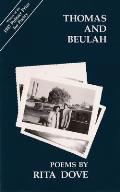
Who says you can't read/post poetry AFTER Poetry Month? Particularly something as delicious as this one, by former Poet Laureate Rita Dove, from her 1987 Pulitzer Prize winning collection Thomas and Beulah?

Note to poets and other writers: Rumor has it that Thomas and Beulah was rejected by numerous publishers before being picked up by Carnegie Mellon....so keep writing and hang in there!


Gospel


Swing low so I
can step inside—


a humming ship of voices
big with all

the wrongs done
done them.
No sound this generous
could fail:

ride joy until
it cracks like an egg,
make sorrow
seethe and whisper.

From a fortress
of animal misery
soars the chill voice
of the tenor, enraptured

with sacrifice.

What do I see,

he complains, notes
brightly rising

towards a sky
blank with promise.
Yet how healthy
the single contralto

settling deeper
into her watery furs!
Carry me home,
she cajoles, bearing

down. Candelabras
brim.  But he slips
through God’s net and swims
heavenward, warbling.

from Thomas and Beulah (Carnegie Mellon Univ Press, 1986)


And a heads up for those in the New York area (h/t thanks to the Poetry Society of America)


Friday, May 4, 7:30pm

Queens, NY

POETS IN THE PLAYHOUSE:
Rita Dove's Thomas and Beulah

Poets in the Playhouse, brings  poetry from page to stage, beginning with a theatrical staging by students of Thomas and Beulah, the Pulitzer prize-winning collection by Rita Dove at Queens College with a theatrical staging by students. Introduced by Darrel Alejandro Holnes.

Co-sponsored by the MFA Program in Creative Writing and Literary Translation and the Department of Drama, Theatre & Dance.
The Little Theater at Queens College
King Hall, Room 115
65-30 Kissena Blvd
Flushing, New York


30 April 2012

Poem: canvas and mirror by Evie Shockley

I have a weakness for poetic self-portraits, particularly those that play with the idea of how one describes anything (I still get a thrill from Michael Palmer's "Autobiography" which begins 'All clocks are clouds.' WTF?!? LOL! :)

In honor of Poetry Month and our Alma Mater Cave Canem, here is a poem from the wonder-filled work of Evie Shockley (whose critical work,  Renegade Poetics: Black Aesthetics and Formal Innovation in African American Poetry is a must read

canvas and mirror


self-portrait with cats, with purple, with stacks
      of half-read books adorning my desk, with coffee,

                  with mug, with yesterday's mug. self-portrait
            with guilt, with fear, with thick-banded silver ring,

      painted toes, and no make-up on my face. self-
            portrait with twins, with giggles, with sister at

                  last, with epistrophy, with crepescule with nellie,
with my favorite things. self-portrait with hard

head, with soft light, with raised eyebrow. self-
      portrait voo-doo, self-portrait hijinks, self-portrait

                  surprise. self-portrait with patience, with political
            protest, with poetry, with papers to grade. self-

      portrait as thaumaturgic lass, self-portrait as luna
            larva, self-portrait as your mama. self-portrait

                  with self at sixteen. self-portrait with shit-kickers,
with hip-huggers, with crimson silk, with wild

mushroom risotto and a glass of malbec. self-
      portrait with partial disclosure, self-portrait with

                  half-truths, self-portrait with demi-monde. self-
            portrait with a night at the beach, with a view

      overlooking the lake, with cancelled flight. self-
            portrait with a real future, with a slight chance of

                  sours, with glasses, with cream, with fries, with
a way with words, with a propositional phrase


27 April 2012

Poem: Our Tears are Sweet by Simin Behbahni

Simin Behbahni (b. 1927)
Simin Behbahni is a prominent contemporary Persian poets. Although she is considered Iran's national poet (The Lioness of Iran) that country denied her a travel permit in 2010 as she was boarding a plane to Paris.
Audio of Behbahni reading her work can be found on the NPR website here

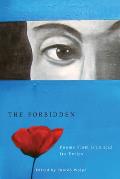
This poem is from the new anthology, The Forbidden: Poems from Iran and Its Exiles, edited by Sholeh Wolpé, who I had the great pleasure of meeting at this year's AWP Conference in Chicago.


Our Tears Are Sweet


Our tears are sweet, our laughter venomous.
We're pleased when sad, and sad when pleased.
We wash one hand in blood, the other we wash the blood off.
We cry as we laugh at the futility of both these acts.
Eight years have passed, we haven't discovered their meaning.
We have been like children, beyond any account or accounting.
We have broken every stalk, like a wind in the garden.
We have picked clean the vine's candelabra.
And if we found a tree, still standing, defiantly, 
we cut its branches, we pulled it by the roots.
We wished for a war, it brought us misery,
now, repentant, we wish for peace.
We pulled wings and heads from bodies,
now, seeking a cure, we are busy grafting.


Will it come to life, will it fly,
the head we attach, the wing we stitch?


translated by Farzaneh Milani and Keveh Safa
from The Forbidden: Poems from Iran and Its Exiles, edited by Sholeh Wolpé (Michigan State University Press, 2012)

26 April 2012

C. P. Cavafy: Three translations of "The City"

Constantine Petrou Photiades Cavafy (1863 - 1932)
Happy Poem in Your Pocket Day! In addition to carrying around the poems Poets House are handing out today, many written by 3rd and 6th graders from PS 89 and I. S. 289 about the neighborhood, I also have Edmund Keely's Essential Cavafy, one of my favorite 'little books.' Here is Cavafy's "The City," first, the original, from the Cavafy Archive website then two translations.

Note from George Kalogeris: "In the original, all the rhymes are full rhymes, the pattern is a-b-b-c-c-d-d-a, and the first and last line of each stanza rhymes variations of the word for “sea” (thalassa) and for “wasted” (xalassa)."


Η Πόλις
                                                                                                                                                                                                   
Είπες· «Θα πάγω σ’ άλλη γη, θα πάγω σ’ άλλη θάλασσα.
Μια πόλις άλλη θα βρεθεί καλλίτερη από αυτή.
Κάθε προσπάθεια μου μια καταδίκη είναι γραφτή·
κ’ είν’ η καρδιά μου — σαν νεκρός — θαμένη.
Ο νους μου ως πότε μες στον μαρασμόν αυτόν θα μένει.
Όπου το μάτι μου γυρίσω, όπου κι αν δω
ερείπια μαύρα της ζωής μου βλέπω εδώ,
που τόσα χρόνια πέρασα και ρήμαξα και χάλασα.»

Καινούριους τόπους δεν θα βρεις, δεν θάβρεις άλλες θάλασσες.
Η πόλις θα σε ακολουθεί. Στους δρόμους θα γυρνάς
τους ίδιους. Και στες γειτονιές τες ίδιες θα γερνάς·
και μες στα ίδια σπίτια αυτά θ’ ασπρίζεις.
Πάντα στην πόλι αυτή θα φθάνεις. Για τα αλλού — μη ελπίζεις—
δεν έχει πλοίο για σε, δεν έχει οδό.
Έτσι που τη ζωή σου ρήμαξες εδώ
στην κώχη τούτη την μικρή, σ’ όλην την γη την χάλασες. 


The City


You said: “I’ll go to another country, go to another shore,
find another city better than this one.
Whatever I try to do is fated to turn out wrong
and my heart lies buried like something dead.
How long can I let my mind moulder in this place?
Wherever I turn, wherever I look,
I see the black ruins of my life, here,
where I’ve spent so many years, wasted them, destroyed them totally.”

You won’t find a new country, won’t find another shore.
This city will always pursue you.
You’ll walk the same streets, grow old
in the same neighborhoods, turn gray in these same houses.
You’ll always end up in this city. Don’t hope for things elsewhere:
there’s no ship for you, there’s no road.
Now that you’ve wasted your life here, in this small corner,
you've destroyed it everywhere in the world

from C.P. Cavafy: Collected Poems (Princeton University Press, 1992)   
translated By Edmund Keeley and Philip Sherrard
        

The City

    You said: “I’ll go to another land, I’ll go to another sea.
I'll find a city better than this one.
My every effort is a written indictment,
and my heart — like someone dead — is buried.
How long will my mind remain in this decaying state.
Wherever I cast my eyes, wherever I look,
I see my life in black ruins here,
where I spent so many years, and ruined and wasted them.”

You will not find new lands, you will not find other seas.
The city will follow you. You will roam
the same streets. And you will grow old in the same neighborhood,
and your hair will turn white in the same houses.
You will always arrive in this city. Don’t hope for elsewhere -
there is no ship for you, there is no road.
As you have wasted your life here,
in this small corner, so you have ruined it on the whole earth.

translated by Aliki Barnstone


The City

    You said: “I’ll go to some other land, I’ll go to some other shore.
There’s bound to be another city that’s better by far.
My every effort has been ill-fated from the start;
my heart — like something dead — lies buried away;
How long will my mind endure this slow decay?
Wherever I look, wherever I cast my eyes,
I see all round me the black rubble of my life
where I’ve spent so many ruined and wasted years.”

You’ll find no new places, you won’t find other shores.
The city will follow you. The streets in which you pace
will be the same, you’ll haunt the same familiar places,
and inside those same houses you’ll grow old.
You’ll always end up in this city. Don’t bother to hope
for a ship, a route, to take you somewhere else; they don’t exist.
Just as you’ve destroyed your life here, here in this
small corner, so you’ve wasted it through all the world

from C. P. Cavafy: Collected Poems (Knopf, 2009)
translated by Daniel Mendelsohn


25 April 2012

Four Sisters from Zakaria by Ghassan Zaqtan

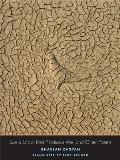
Continuing Poetry in Translation Week, here is a poem by Palestinian Poet Ghassan Zaqtan. He was supposed to give a reading at Poets House a few weeks ago, as part of his US tour to promote a new book of English translations of his work, but could not get a visa. We went ahead with the program, with his translator poet and doctor Fady Joudah reading and translating some of the work featured on a recent YouTube video Zaqtan made once it became evident that he would not be traveling to the U.S.
Ghassan Zaqtan

Joudah also talks about talks about translating him here.

You can hear this and another poem in both English and Arabic here at the PBS website. PBS'  video of him reading is here.

* Zakaria and Artouf are two Palestinian villages in the Khalil (Hebron) area whose occupants were forced to leave in 1948.

Four sisters from Zakaria
Four sisters 
climb the hill alone 
in black clothes. 
Four sisters sigh 
facing the thicket. 
Four sisters in the dark 
read wet letters. 
A train coming 
from Artouf passed 
behind the picture. 
A horse carrying 
a girl from Zakaria
neighs on the ridge 
across the plain. 
In the gorge 
clouds slowly pass. 
Four sisters 
from Zakaria, alone 
in black clothes 
on the hill.


Four sisters from Zakariyya
Four sisters climb the mountain
alone 
in black clothes. 

Four sisters sigh in front of the grove.

Four sisters in the dark 
reading soaked letters.

There was a train
behind the photo passing from Artouf.
There was a horse
carrying a girl from Zakariyya
whinnying in the slope behind the plains. 

And the clouds were slowly passing
through the canyon.

Four sisters from Zakariyya
by the hill
alone 
in black clothes.


Followers